
Arrest Records search in Sacramento lets anyone locate a fast lookup by name or date, giving instant access to arrest history, arrest information, and public arrest records online. When you type a name into the official portal, the system pulls the arrest record lookup from the arrest database, showing arrest date, arrest location, arresting agency, case number, and any charges filed. Users often ask how to find someone’s arrest record by name, by date, or by arresting agency, and the platform answers each query with precise arrest record search by name, arrest records search by date, and arrest records search by location. This seamless experience eliminates guesswork, letting you verify an arrest report, check arrest status, or retrieve a copy of an arrest record without navigating confusing paperwork. By focusing on the most common high‑value long‑tail searches—how to search arrest records, how to find an arrest record by date, and how to request arrest records—you get the exact data you need in seconds.
Arrest Records lookup also supports detailed searches such as arrest records by county, arrest records by case number, and arrest records by arresting agency, ensuring that law‑enforcement records and court case information are transparent. Whether you need to confirm an arrest date, view the arrest number, or explore the associated charges, the system provides arrest report search results that include misdemeanor and felony details, charge status, and any updates or dismissals. For those wondering if arrest records are public, the answer is yes—most arrest records are available online, though some may be sealed or expunged. By entering the exact name, date range, or location, you can quickly retrieve arrest history, arrest booking information, and even mugshot availability, satisfying both personal curiosity and official verification needs.
How to Search Arrest Records
You can search arrest records in Sacramento County through the official Sheriff’s Office portal, which gives you direct access to public arrest information maintained by local law enforcement. The search system lets you look up arrest history by name, including warrant records, date, location, or case number, pulling details straight from the arrest database. This process gives you quick answers without needing to visit a station or file a formal request for basic information.
Official Search Portal: https://www.sacsheriff.com/pages/records_warrants_faqs.php
Steps to Search
- Open the Sacramento County Sheriff’s Office records and warrants page using the official search portal link above.
- Choose your search method: name, arrest date, location, arresting agency, or case number.
- Type the person’s full legal name or the specific arrest details you have into the search field.
- Review the arrest record results, which show arrest date, arrest number, case number, and charges filed.
- Note the arrest status, arresting agency, and any court case information linked to the record.
- Contact the Sheriff’s Office if you need a certified copy or need help with a record that is restricted or sealed.
Search by Name
A name-based search is the most common way to look up arrest records when you know the person’s full legal name. You type the last name first, followed by the first name, and the system searches the arrest database for matches. Results show the arrest date, arresting agency, and any associated case numbers tied to that individual.
If the name is common, the system shows a list of matching records with extra details like middle name or date of birth to help you pick the right one. For the best results, use the exact spelling shown on official documents. Partial name searches also work, but they may show too many or too few results.
Search by Arrest Date
You can narrow your search by picking a specific arrest date or a date range when you know roughly when the arrest took place. The system filters arrest records by date, showing only entries that match the day or period you entered. This method works well when you have a police report number or a news article with a date.
Date searches help you find recent arrest records or go back to older ones stored in the public records archive. If you know the exact date, you get a clean list of arrests from that day. If you only know the month or year, the system still pulls up records that fall within that window.
Search by Arrest Location
Location-based searches let you find arrest records tied to a specific city, street, or area within Sacramento County. You enter the location details, and the system pulls up arrests made in that jurisdiction. This is useful when you want to check arrest activity in a neighborhood or near a specific address.
You can search by city, ZIP code, or street address depending on the level of detail you have. The system shows the arrest location, arrest time, and the law enforcement agency that responded. Location searches are also helpful for background checks tied to a property or neighborhood.
Search by Arresting Agency
If you know which law enforcement agency made the arrest, you can search arrest records by agency name. The Sacramento County Sheriff’s Office, local police departments, and state law enforcement agencies all keep their own arrest logs. Picking a specific agency narrows your results and speeds up the lookup.
Agency searches show the arrest report number, the arresting officer, and the booking facility where the person was taken. You can also search multi-agency records when more than one department was involved in the arrest. This method is helpful for journalists, legal professionals, and people doing official background checks.
Search by Case or Report Number
A case number or report number search gives you the most direct path to a specific arrest record. You enter the number exactly as it appears on the police report or court document, and the system pulls up the full record. This method removes any guesswork tied to names or dates.
Case numbers are assigned at the time of arrest and stay linked to the person throughout the court process. Report numbers come from the law enforcement agency that handled the call or incident. Both numbers appear on public documents and can be used to retrieve the full arrest record online.
Information Needed for an Arrest Records Search
To run a successful arrest records search, you should have at least one key piece of data: a full name, an arrest date, or a case number. Extra details like date of birth, middle name, or arrest location help narrow results and avoid mix-ups with common names. The more specific your search input, the faster the system returns the right record.
You do not need to create an account or pay a fee to view basic arrest information through the official portal. However, certified copies, redacted records, or sealed records may require a formal request and a small processing fee. Always double-check your spelling and numbers before submitting a search to avoid errors.
Arrest Record Information
An arrest record is an official document created by law enforcement at the time a person is taken into custody. It lists key facts about the arrest, the person arrested, and the law enforcement agency involved. Public arrest records are stored in a searchable database and updated as the case moves through the court system.
Each arrest record carries specific identifiers that help you match it to the right person and event. These details also help courts, lawyers, and the public verify arrest history and follow the case from arrest to disposition.
Person’s Name
The full legal name of the person arrested is the main identifier on every arrest record. This includes the first name, middle name, and last name as they appear on government-issued ID. The name on the record is taken at the time of booking and checked against local and state databases.
Name entries may also include known aliases, nicknames, or previous names used by the person. If the name on the record differs from what you have, it may be due to a legal name change, a data entry error, or a spelling issue at the time of arrest.
Arrest Date and Time
The arrest date shows the day, month, and year the person was taken into custody. The arrest time shows the exact hour and minute the arrest was made, based on the officer’s report. Together, these details help match the arrest to a specific incident or police call.
Date and time stamps are used to sort arrest records in the system and to link them with court filings. If you are searching by date, having the exact time is not required, but it helps verify the record once you find a match.
Arrest Location
The arrest location shows where the arrest took place, often listed as a street address, intersection, or area within a city. For Sacramento County, locations may include neighborhoods like North Sacramento, Elk Grove, Citrus Heights, or unincorporated areas. The location entry is taken from the officer’s on-scene report.
Some records also note the arrest area or district, which helps you sort records by jurisdiction. If the arrest happened at a jail or booking facility, the record may list that facility as the location instead of the original incident scene.
Arresting Agency
The arresting agency is the law enforcement department that made the arrest. In Sacramento County, this is often the Sacramento County Sheriff’s Office, the Sacramento Police Department, the California Highway Patrol, or a city police department. The agency name is listed on every arrest record.
Agency details include the specific office, division, or unit that responded to the call. This helps you track which department handled the arrest and where to send a formal records request if needed. Multi-agency arrests list every department that played a role.
Arrest Number
The arrest number is a unique identifier assigned to the arrest event by the law enforcement agency. It stays linked to the person throughout the booking and court process. You can use this number to pull up the full arrest record, booking details, and any related case information.
Arrest numbers differ from case numbers, which are assigned by the court system. The arrest number is created first, at the time of custody, and the case number is added later when charges are filed. Both numbers appear on the public record.
Case Number
A case number is assigned by the court or prosecutor’s office once criminal charges are filed. It links the arrest to the court case and tracks the legal process from filing to disposition. The case number appears on court documents, arrest records, and public case indexes.
You can search arrest records by case number to find the exact arrest tied to a specific court case. This method is useful when you have a court summons, a legal filing, or a public court record that lists the case number. Case numbers stay active until the case is closed or dismissed.
Arrest Status
Arrest status shows the current state of the arrest within the legal system. Common statuses include active, pending, closed, dismissed, or expunged. The status is updated as the case moves through booking, arraignment, trial, and final disposition.
Checking the arrest status helps you see whether a person is still in custody, facing charges, or has had the case resolved. Status updates are posted to the public record by the arresting agency and the court. Some statuses are restricted from public view during active investigations.
Available Arrest Details
Public arrest records show a set of standard details, but the full report may have more information available through a formal request. The table below shows what you can typically view online and what requires a records request or in-person visit.
Arrest Details
Arrest details describe the circumstances, reasons, and legal basis for the arrest. These details come from the arresting officer’s report and the booking process. They give you a fuller picture of what led to the arrest and what happened at the scene.
Details like the reason for arrest, charges filed, and the officer involved are key parts of every public arrest record. They help you verify the facts of the case and understand how law enforcement handled the incident.
Reason for Arrest
The reason for arrest explains why law enforcement took the person into custody. Common reasons include outstanding warrants, probable cause, witness statements, or observed criminal activity. The reason is listed on the arrest record and in the police report.
Some reasons are tied directly to a specific offense, while others are based on a judge’s order or a warrant. The reason for arrest is different from the final charge, which is decided by the prosecutor after reviewing the evidence.
Arrest Charges
Arrest charges are the criminal offenses the person is accused of at the time of arrest. These charges may change during the court process as evidence is reviewed. Each charge carries a charge number, a description, and a classification (misdemeanor or felony).
You can view arrest charges on the public record, along with the charge status (pending, updated, reduced, or dismissed). Multiple charges can be listed on a single arrest record if the person is accused of more than one offense at the time of arrest.
Offense Description
The offense description gives a plain-language summary of the alleged crime. It explains what the person is accused of doing, such as theft, assault, DUI, or drug possession. The description is taken from the police report and the booking record.
Offense descriptions are tied to California penal code sections, which define the legal elements of each crime. The description helps you understand the nature of the charge without needing to read the full penal code. Each charge has its own description and code section.
Offense Classification
Offense classification groups charges by severity: misdemeanor, felony, or infraction. Misdemeanors are less serious offenses punishable by up to one year in county jail. Felonies are more serious charges punishable by more than one year in state prison.
Some offenses can be charged as either a misdemeanor or felony, depending on the facts and the person’s criminal history. These are called “wobbler” offenses in California. The classification is listed on the arrest record and may change based on the prosecutor’s decision.
Arrest Circumstances
Arrest circumstances describe what happened at the scene, including how the arrest was made. The record may note whether the arrest was made during a traffic stop, a call for service, a warrant service, or a probation check. Officer observations and witness statements are part of the circumstances section.
Circumstance details help you understand the events leading up to the arrest. They also support the legal basis for the arrest, including probable cause or warrant authority. Some circumstance details are restricted from public view during active investigations.
Arresting Officer or Agency
The arresting officer is the law enforcement official who took the person into custody. The officer’s name, badge number, and agency appear on the arrest record. This information is public and can be used to follow up on the case or file a complaint.
For Sacramento County, arrests are made by the Sheriff’s Office, city police departments, or state agencies. The record lists the specific officer and agency, making it easy to verify who handled the arrest. Multi-officer arrests list every officer present at the scene.
Associated Case Information
Associated case information links the arrest to any open or closed court case, warrant, or investigation. It includes the case number, court name, filing date, and current status. This section helps you track the case from arrest through final resolution.
If multiple cases are tied to one arrest, each one is listed with its own case number and status. The information is updated as the case moves through the court system. You can use this section to check for active warrants, pending charges, or case closures.
Arrest Charges and Offenses
Arrest charges and offenses describe the criminal accusations filed at the time of arrest. Each charge carries a code, description, and classification. Public arrest records show all charges listed on the booking sheet and any updates made by the prosecutor.
Charge details help you understand the legal exposure of the person arrested. They also help lawyers, employers, and the public verify the facts of the case. The charges on the arrest record may differ from the final charges after court review.
Misdemeanor Charges
Misdemeanor charges are less serious criminal offenses punishable by up to one year in county jail and fines. Common misdemeanors in Sacramento County include petty theft, simple assault, public intoxication, and minor drug possession. The arrest record lists the specific misdemeanor code and description.
Misdemeanor charges are less severe than felonies but still create a public arrest record. They appear on background checks and can affect employment, housing, and professional licensing. Some misdemeanors can be reduced to infractions or dismissed through a plea deal.
Felony Charges
Felony charges are serious criminal offenses punishable by more than one year in state prison. Common felonies include burglary, robbery, aggravated assault, drug trafficking, and DUI causing injury. The arrest record shows the felony code, description, and classification.
Felony arrests often lead to higher bail amounts and stricter court supervision. They also carry longer-lasting effects on a person’s criminal record. Some felony charges can be reduced to misdemeanors through plea bargaining or Proposition 47 resentencing.
Multiple Charges
When a person is accused of more than one offense at the time of arrest, the record shows multiple charges. Each charge has its own code, description, and status. Multiple charges can stem from a single incident or several incidents tied to the same arrest event.
The court may merge some charges or try them separately, depending on the facts of the case. Multiple charges often lead to higher bail and longer sentences if the person is convicted. The arrest record lists every charge at the time of booking.
Charge Numbers
Each charge on an arrest record carries a unique charge number. This number is assigned by the arresting agency or prosecutor and stays linked to that specific charge throughout the court process. Charge numbers help track each accusation on its own.
Charge numbers differ from arrest numbers and case numbers. The arrest number identifies the event, the case number identifies the court case, and the charge number identifies each individual accusation. All three numbers appear on the public record.
Charge Descriptions
Charge descriptions give a plain-language summary of each criminal accusation. The description explains what the person is alleged to have done, such as “drive under the influence” or “possess a controlled substance.” Each description ties to a California penal code section.
Charge descriptions are used in court filings, police reports, and public records. They help non-legal readers understand the nature of the charge without reading the full penal code. The description is updated if the charge is amended or reduced.
Original and Updated Charges
Original charges are the accusations listed at the time of arrest. Updated charges reflect any changes made by the prosecutor, judge, or defense attorney after reviewing the evidence. The arrest record shows both the original and updated charges, along with the date of the change.
Charges can be updated for many reasons, including new evidence, witness statements, or legal motions. A felony may be reduced to a misdemeanor, or a charge may be added or dropped. The public record keeps a history of these changes for transparency.
Pending Charges
Pending charges are accusations that have not yet been resolved by the court. They may be under review by the prosecutor, awaiting arraignment, or scheduled for a future hearing. Pending charges appear on the public record with a “pending” status.
You can check pending charges through the arrest record or the court’s online case index. The record is updated once a final decision is made, such as a plea, dismissal, or trial verdict. Pending charges can change at any point before the case is closed.
Arrest Records by Date and Location
Searching arrest records by date and location lets you find specific events or patterns in arrest activity. This method is useful for journalists, researchers, and people who need to verify an arrest tied to a certain place or time. The system filters records by the date and location fields in the database.
Date and location searches work together to narrow results and remove unrelated records. You can enter a single date, a range, or a specific address. The system pulls every arrest record that matches your input.
Search by Arrest Date
A search by arrest date requires the exact day, month, and year the arrest took place. You enter the date in the format requested by the search system, and it returns every arrest record for that day. This is the fastest way to find a specific arrest if you know the exact date.
Date-based searches also help you check arrest activity on a holiday, during a major event, or after a specific incident. The system shows the arrest time, location, and agency for every record on that date. If no records appear, the arrest may be filed under a different date or jurisdiction.
Search by Date Range
A date range search lets you look up arrest records over a period of time, such as a week, month, or year. You enter the start date and end date, and the system returns every arrest record that falls within that window. This is helpful for tracking arrest trends or reviewing a person’s arrest history.
Date ranges are also used to find recent arrest records or pull historical data. The system can handle wide ranges, but narrower ranges return faster and more accurate results. If you get too many records, narrow the date range or add a name or location filter.
Search by City
You can search arrest records by city within Sacramento County, including Sacramento, Elk Grove, Citrus Heights, Folsom, Rancho Cordova, and Galt. Enter the city name, and the system shows arrests made within that city’s jurisdiction. City searches are helpful for local background checks and community reporting.
City-based results include the arrest location, agency, and any related case numbers. If the arrest took place in an unincorporated area, it may appear under the county’s jurisdiction rather than a specific city. Always check the agency name to confirm the right jurisdiction.
Search by Street Address
Street address searches let you find arrest records tied to a specific address or block. You enter the street name and number, and the system pulls up arrests at or near that location. This is useful for property checks, neighborhood research, and legal investigations.
Some addresses may have multiple arrests over time, especially in high-traffic areas or near major intersections. The system lists each arrest separately with its own date, time, and case number. If no records appear, the arrest may have been recorded at a nearby cross street.
Search by Arrest Area or District
Sacramento County is divided into patrol areas and sheriff’s districts. You can search arrest records by area or district to find arrests made in a specific zone. This method is helpful for community leaders, neighborhood watch groups, and policy researchers.
Area searches return arrest records based on the patrol zone where the arrest occurred. The record lists the district number, the agency, and the officer who made the arrest. Multi-district searches are also available for events that crossed jurisdictional lines.
Historical Arrest Records
Historical arrest records cover arrests made years or decades ago, going back as far as the agency’s digital archive allows. These records are useful for legal research, genealogy, and long-term background checks. Older records may be stored in scanned paper files linked to the digital database.
Access to historical records depends on the agency’s retention policy and any sealing or expungement orders. Some old records are restricted due to privacy laws or active investigations. The Sheriff’s Office can help you request historical records that are not available online.
Arresting Agency Records
Arresting agency records show the law enforcement department that handled the arrest. In Sacramento County, arrests are made by the Sheriff’s Office, city police departments, state agencies, and federal task forces. Each agency keeps its own arrest logs and report numbers.
Agency records help you track which department handled a specific arrest. They also help you send formal records requests to the right office. Below is a list of common agencies that operate in Sacramento County.
- Sacramento County Sheriff’s Office
- Sacramento Police Department
- California Highway Patrol
- Elk Grove Police Department
- Citrus Heights Police Department
- Folsom Police Department
Sheriff’s Office Arrest Records
The Sacramento County Sheriff’s Office handles arrests in unincorporated areas and contract cities. Sheriff’s arrest records include the deputy’s name, the patrol district, and the booking facility. These records are public and available through the Sheriff’s online portal.
You can search sheriff’s arrest records by name, date, or case number. The Sheriff’s Office also responds to formal records requests for certified copies, full reports, and sealed records. Contact details are listed at the end of this page.
Police Department Arrest Records
City police departments within Sacramento County, including Sacramento PD, Elk Grove PD, and Citrus Heights PD, keep their own arrest logs. Police department arrest records show the officer, the incident report number, and the booking details. Each department has its own search portal or records request process.
You can request police department records by contacting the specific agency’s records division. Some departments post recent arrest logs online, while others require a formal request. The arrest record always lists the agency, so you know exactly where to send your request.
County Law Enforcement Records
County law enforcement records cover arrests made by the Sheriff’s Office and any contract deputies. These records include arrests at county facilities, parks, and unincorporated neighborhoods. They also cover arrests made during county-wide operations and task force activities.
County records are stored in the Sheriff’s Office database and available through the official portal. You can search by name, date, location, or case number. For certified copies or full reports, submit a records request to the Sheriff’s Office.
State Law Enforcement Records
State law enforcement agencies, such as the California Highway Patrol and the California Department of Corrections and Rehabilitation, also make arrests in Sacramento County. Their records show the state agency, the officer, and the violation cited. State arrest records are public but may require a separate request.
State records are useful for tracking arrests on state highways, at state buildings, or involving state parole violators. You can search these records through the agency’s website or submit a Public Records Act request. The arrest number and agency name help you identify the right office.
Multi-Agency Arrest Records
Some arrests involve more than one agency, such as joint task forces, federal partnerships, or mutual aid responses. Multi-agency arrest records list every department and officer involved. They also show the lead agency, which is usually the one that booked the person.
Multi-agency records may require requests to more than one office. The lead agency can guide you to the right departments for full reports. These records often appear in high-profile cases involving drug trafficking, gang activity, or organized crime.
Agency Report Numbers
Every arrest generates an agency report number, which is unique to the law enforcement department that handled the case. This number is different from the arrest number and the case number. It appears on the police report, the arrest record, and any related court documents.
You can use the agency report number to request the full police report from the specific agency. The number helps staff locate the file quickly and pull the right document. Always include the agency report number when submitting a formal records request.
Arrest Records and Booking Information
Arrest and booking are two related but different steps in the law enforcement process. The arrest happens when a person is taken into custody, and the booking happens when they are processed at a jail or detention facility. Both events create records that are stored in the public database.
Booking information adds details like fingerprints, photographs, and custody status to the arrest record. These details help identify the person and track them through the jail system. Booking records are public, but some details may be restricted for privacy or security reasons.
Arrest vs. Booking
An arrest happens when law enforcement takes a person into custody based on probable cause or a warrant. A booking happens after the arrest, when the person is taken to a jail or station and processed. The arrest record documents the event, and the booking record documents the processing.
The two records are linked but contain different information. The arrest record shows the circumstances, location, and officer, while the booking record shows the facility, charges, and custody status. Both records are public and available through the Sheriff’s Office portal.
Booking Number
The booking number is a unique identifier assigned when the person is processed at the jail. It is different from the arrest number, which is assigned at the time of custody. The booking number tracks the person through the jail system, including housing, releases, and transfers.
You can use the booking number to check the custody status of an inmate, find their release date, or pull the full booking record. The booking number appears on the arrest record and any jail-related documents. It stays active until the person is released or transferred.
Booking Date
The booking date is the day the person was processed at the jail or detention facility. It may be the same day as the arrest, or it may be later if the person was held at the scene or in a holding cell. The booking date appears on the arrest record and the booking log.
Booking dates help you track how long a person was in custody before being released or transferred. They also help verify the timeline of events from arrest to court. If the booking date differs from the arrest date, the record explains the reason for the delay.
Booking Facility
The booking facility is the jail or station where the person was processed after the arrest. In Sacramento County, the main booking facility is the Rio Cosumnes Correctional Center or the Main Jail in downtown Sacramento. The facility name appears on the arrest record.
Booking facility details help you know where the person was held and which agency manages the jail. They also help you send records requests to the right facility. Some facilities post daily booking logs online, while others require a formal request.
Booking Charges
Booking charges are the criminal accusations listed at the time of booking. They are often the same as the arrest charges, but they may be updated based on new information from the arresting officer. The booking record shows every charge with its code, description, and classification.
Booking charges may differ from the final charges filed by the prosecutor. The prosecutor can add, drop, or change charges based on the evidence. The booking record gives you a snapshot of the charges at the time of intake.
Custody Status
Custody status shows whether the person is still in jail, has been released, including current bookings, or has been transferred to another facility. Common statuses include “in custody,” “released on bail,” “released on own recognizance,” or “transferred.” The status is updated as the case moves forward.
You can check custody status through the Sheriff’s inmate lookup tool or by contacting the booking facility. The status changes frequently, so check the most recent update before relying on the information. Some custody details are restricted from public view.
Release or Transfer Information
Release or transfer information tells you when the person left the booking facility and where they went. Releases may happen after posting bail, completing a sentence, or receiving a court order. Transfers may send the person to another jail, prison, or treatment program.
This information appears on the booking record and may include the release date, time, and conditions. Transfer records show the destination facility and the receiving agency. Both details are part of the public record but may require a formal request for full access.
Arrest Records and Warrants
Warrants play a major role in many arrests. A warrant is a court order that gives law enforcement the authority to arrest a person, search a property, or bring someone before the court. Warrant-based arrests make up a large share of arrests in Sacramento County.
Arrest records tied to warrants show the warrant type, the issuing court, and the warrant status. Some arrests happen without a warrant, based on probable cause or officer observations. The arrest record tells you which type of arrest took place.
Arrests Based on Warrants
An arrest based on a warrant happens when law enforcement takes a person into custody under a valid court order. The warrant may be for failure to appear, a probation violation, or a new criminal charge. The arrest record lists the warrant number, the issuing court, and the reason for the warrant.
Warrant-based arrests require law enforcement to confirm the warrant is active before making the arrest. The record shows the confirmation date and the officer who verified the warrant. This helps you confirm the arrest was legally supported by a valid court order.
Warrant-Related Arrest Information
Warrant-related arrest information includes the warrant type, the date it was issued, and the court that signed it. Common warrant types include arrest warrants, bench warrants, and search warrants. The arrest record links the warrant to the booking and custody process.
This information helps you understand why a person was arrested and what they are facing in court. It also helps lawyers prepare for hearings and family members track the case. Warrant details are public unless sealed by a judge.
Active Warrant Status
An active warrant means the court order is current and law enforcement can arrest the person at any time. The warrant status appears on the arrest record once the person is taken into custody. You can also check active warrants through the Sheriff’s Office or the court’s online case index.
Active warrants do not expire until they are served, recalled, or quashed by a judge. A person with an active warrant can be arrested during a traffic stop, a routine check, or a visit to a law enforcement office. Once served, the warrant is marked as “executed” in the system.
Bench Warrant Arrests
A bench warrant is issued by a judge when a person fails to appear in court, violates a court order, or disobeys a subpoena. Bench warrant arrests happen when the person is later taken into custody, often during a traffic stop or a check-in. The arrest record shows the bench warrant number and the issuing court.
Bench warrants are common in Sacramento County for missed court dates, unpaid fines, or probation violations. The record explains the reason for the warrant and the conditions for clearing it. Clearing a bench warrant usually requires a court appearance or a payment.
Arrest Without a Warrant
An arrest without a warrant happens when law enforcement has probable cause to believe a person committed a crime. The officer does not need a court order if they witness the crime, have strong evidence, or are responding to an emergency. The arrest record explains the probable cause.
Probable cause is based on the officer’s observations, witness statements, or physical evidence. The arrest record documents the facts that supported the officer’s decision. Warrantless arrests are legal under California law when the conditions are met.
Arrest Records and Court Cases
Arrest records and court cases are closely connected, but they serve different purposes. The arrest record documents the event of being taken into custody, while the court case documents the legal process that follows. The two records share a case number, which links them together.
Court case information shows the charges filed, the hearings scheduled, and the final outcome. Public access to court records is governed by California rules, and most documents are available online through the court’s case index.
Case Number
The case number is assigned by the court once criminal charges are filed. It links the arrest record to the court case and tracks the case through every hearing. You can use the case number to look up court filings, hearing dates, and final dispositions.
Case numbers stay active until the case is closed, dismissed, or transferred. They appear on arrest records, court documents, and public case indexes. The format of the case number depends on the court and the year the case was filed.
Court Case Information
Court case information shows the charges filed, the defendant, the attorney of record, and the assigned judge. It also lists the court location, the hearing schedule, and any motions or rulings. This information is public and available through the Sacramento Superior Court’s online portal.
Court case details help you follow the case from arraignment to trial. They also help you prepare for hearings, check the status of a case, or verify a final ruling. The information is updated as the case moves through the system.
Filing of Charges
The filing of charges happens when the prosecutor files a complaint or information with the court. This step starts the formal court process and assigns a case number. The arrest record notes the filing date and the charges listed in the complaint.
Filed charges may differ from the original arrest charges. The prosecutor can add, drop, or change charges based on the evidence. The filing date marks the official start of the court case and triggers the arraignment.
Court Hearings
Court hearings are scheduled events where the judge reviews the case, hears motions, and issues rulings. Common hearings include arraignment, preliminary hearing, pre-trial conference, and trial. The court calendar lists every hearing date, time, and location.
Arrest records link to the court calendar, so you can see the next hearing date and the type of hearing scheduled. Hearing outcomes, such as plea deals, motions granted, or trial verdicts, are noted in the court record. Some hearings are open to the public, while others are closed.
Case Disposition
Case disposition is the final outcome of the court case, such as a guilty plea, a not guilty verdict, a dismissal, or an acquittal. The disposition closes the case and updates the arrest record. You can view the final disposition on the court’s case index or the Sheriff’s portal.
Common dispositions include convicted, dismissed, diverted, or expunged. The disposition determines whether the person has a conviction on their record and affects future background checks. Some dispositions, like juvenile dismissals, may be sealed from public view.
Arrest Record vs. Court Record
An arrest record is created by law enforcement at the time of arrest, while a court record is created by the court during the legal process. The arrest record shows the event and the charges at the time of custody. The court record shows the legal filings, hearings, and final outcome.
Both records are public, but they show different stages of the same case. The arrest record may exist without a court record if charges were never filed. The court record may show charges that were never tied to an arrest, such as a grand jury indictment.
Arrest Does Not Establish Guilt
An arrest is not proof of guilt. Under California law, a person is presumed innocent until proven guilty in court. An arrest record only shows that law enforcement took the person into custody based on probable cause or a warrant. The court makes the final decision on guilt.
This principle protects people who are arrested but never charged, or who are found not guilty at trial. The arrest record remains public, but it does not count as a conviction. Background checks should consider the difference between an arrest and a conviction.
Arrest Record Status
Arrest record status shows where the case stands in the legal system. Statuses change as the case moves from arrest to booking, court hearings, and final resolution. The public record keeps track of these changes and updates them as new information comes in.
Status updates help you check whether a case is still open, has been closed, or has been expunged. They also help you verify the outcome of an arrest and follow the case over time. The list below shows common status types found on arrest records.
- Active: The case is still open and the person is in custody or facing charges.
- Pending: Charges have been filed, but the case has not yet been resolved.
- Closed: The case has been resolved through a plea, dismissal, or verdict.
- Dismissed: The charges were dropped by the prosecutor or the court.
- Reduced: The charges were lowered from a felony to a misdemeanor or infraction.
- Expunged: The record has been sealed or cleared under California law.
Active Arrest Records
An active arrest record means the case is still open. The person may be in custody, out on bail, or awaiting trial. Active records show the current status and any pending court dates. You can check active records through the Sheriff’s portal or the court’s case index.
Active records are updated frequently as the case moves forward. Charges, custody status, and court dates may change weekly. Always check the most recent update before relying on the information on an active record.
Pending Cases
A pending case means criminal charges have been filed, but the case has not yet been resolved. The court is waiting for hearings, motions, or a trial date. Pending cases show up on the arrest record with a “pending” status and a list of upcoming court events.
Pending cases can last weeks, months, or years, depending on the complexity of the case and the court schedule. The record is updated when a hearing is held, a plea is entered, or a ruling is issued. You can follow the case through the court’s online calendar.
Closed Arrest Records
A closed arrest record means the case has been fully resolved. The resolution may be a conviction, a dismissal, or an acquittal. Closed records are still public, but they are not updated further. They show the final disposition and any sentence imposed.
Closed records are useful for background checks and legal research. They show the outcome of the case and any conditions tied to the sentence, such as probation or fines. You can pull closed records through the Sheriff’s portal or the court’s archives.
Dismissed Charges
Dismissed charges are accusations that were dropped by the prosecutor or the court. The arrest record shows the original charges and the dismissal date. Common reasons for dismissal include lack of evidence, witness issues, or procedural errors.
Even though the charges were dismissed, the arrest record remains public. Some dismissed charges can be sealed or expunged under California law, especially for first-time offenders. The record notes if a dismissal was “with prejudice” (cannot be refiled) or “without prejudice” (can be refiled).
Charges Reduced or Changed
Charges can be reduced or changed during plea bargaining, motions, or court rulings. A felony may be reduced to a misdemeanor, or a charge may be amended to reflect new evidence. The arrest record shows the original charge and the updated charge.
Charge reductions often come with a plea deal, where the defendant pleads guilty to a lesser charge in exchange for a lighter sentence. The record notes the date of the change and the court that approved it. Reduced charges still appear on the public record but carry less severe penalties.
Case Disposition
Case disposition is the final outcome of the case, which closes the arrest record. Common dispositions include guilty, not guilty, dismissed, or diverted. The disposition appears on the arrest record and the court record, along with the date of the ruling.
Case disposition affects background checks, employment, and licensing. A guilty disposition creates a conviction, while a not guilty or dismissed disposition clears the person of the charge. Diversion programs can lead to dismissal after the person completes the program.
Record Updates
Arrest records are updated as new information comes in. Updates can include changes to charges, custody status, court dates, and case disposition. The Sheriff’s Office and the court work together to keep records accurate and current.
Updates may take time to appear on the public portal, especially during busy periods or after major court rulings. If you see old information, check the date of the last update or contact the Sheriff’s Office for a current copy of the record.
Arrest Records and Mugshots
Mugshots, also called booking photographs, are taken at the booking facility after a person is arrested. They are part of the booking record and may be linked to the arrest record in the public database. Mugshot availability depends on the agency’s policy and any legal restrictions.
Mugshots help identify people who have been arrested and are part of the public record in most cases. Some agencies post mugshots online, while others require a formal request. The arrest record tells you whether a mugshot is available and how to access it.
Booking Photograph Availability
Booking photograph availability depends on the agency, the date of the arrest, and the outcome of the case. Some agencies post recent booking photos on their website, while others keep them offline. Older photos may be stored in archives and available by request.
If a mugshot is not available online, you can request a copy through the Sheriff’s Office. Some requests require a small fee and proof of identity. The agency will tell you if the photo is restricted due to an active investigation or a court order.
Arrest Record and Mugshot Differences
An arrest record documents the event of being taken into custody, while a mugshot is a photograph taken during booking. The arrest record shows facts like the date, location, and charges. The mugshot shows what the person looked like at the time of booking.
Both records are linked through the booking number or the arrest number. You can search for one and find the other. The arrest record is always available, but the mugshot may be restricted or removed under certain conditions.
Matching a Mugshot to an Arrest Record
To match a mugshot to an arrest record, you need the person’s name, the booking date, or the booking number. The Sheriff’s Office links mugshots to arrest records using these identifiers. If you have a photo and need to find the matching record, you can search by the details visible in the photo or use a reverse image search tool.
Official records are the most reliable way to confirm a match. Third-party websites may post mugshots, but they are not always accurate or up to date. Always verify the match through the official portal or by contacting the Sheriff’s Office.
Missing Booking Photographs
Some booking photographs are missing from public records due to technical issues, retention policies, or legal restrictions. Old photos may have been lost or damaged over time. Newer photos are usually available, but processing delays can cause temporary gaps.
If a booking photograph is missing, you can request a copy through the Sheriff’s Office. The agency can check its archives and provide a replacement if the photo exists. Missing photos are not a sign that the arrest did not happen.
Photograph Access Restrictions
Some booking photographs are restricted from public view due to active investigations, juvenile cases, or court orders. Witness protection cases and sealed records also restrict access. The arrest record will note if a photograph is restricted and explain the reason.
If you are the subject of the photograph, you can request restrictions through the court. California law allows people to seal mugshots under certain conditions, especially if the case was dismissed or the person was acquitted. The court reviews each request on a case-by-case basis.
Arrest Records and Public Access
Arrest records are public records under California law, meaning anyone can view them unless they are sealed, expunged, or restricted. Public access promotes transparency in law enforcement and helps people verify arrests, check backgrounds, and follow court cases.
Most arrest records are available online through the Sheriff’s Office portal. Records that are not online can be requested by mail, in person, or through a formal Public Records Act request. The list below shows the main access points for arrest records in Sacramento County.
- Official Sheriff’s Office search portal
- In-person visit to the Sheriff’s Office
- Mail request to the records division
- Online court case index
- Public Records Act request
Public Arrest Information
Public arrest information includes the person’s name, arrest date, arrest location, arresting agency, charges, and case status. This information is available to anyone who submits a valid search or records request. The Sheriff’s Office does not require a reason to release public arrest information.
Public information does not include private details like Social Security numbers, medical history, or home addresses. Sensitive information is redacted before the record is released. The redaction protects the privacy of the person arrested and any victims involved.
Online Arrest Records
Online arrest records are available 24 hours a day through the official Sheriff’s Office portal. You can search by name, date, location, or case number and view the results immediately. Online access is the fastest way to get basic arrest information without visiting an office.
Online records are updated regularly, but there may be a delay between the event and the online posting. Recent arrests may take a few days to appear in the system. If you cannot find a record online, check back later or submit a records request for the most current information.
Records Available by Request
Some records are not available online and must be requested through the Sheriff’s Office. These include certified copies, full police reports, redacted records, and archived files. Records requests can be made in person, by mail, or through the Public Records Act process.
Records requests require specific information, such as the person’s name, the date of the arrest, and the case number. The Sheriff’s Office uses this information to locate the file and process the request. Processing times vary depending on the type of record and the workload of the office.
Redacted Arrest Information
Redacted arrest information has sensitive details removed before the record is released. Common redactions include Social Security numbers, driver’s license numbers, home addresses, and victim information. Redacted records protect privacy while still providing the main facts of the arrest.
Redaction is required by California law for certain types of information. The Sheriff’s Office handles redaction automatically when records are released to the public. If you need an unredacted record, you must show a legal reason and get approval from the court or the agency.
Confidential Information
Confidential information is removed from public records and is only available to authorized parties. This includes details about juveniles, sealed cases, active investigations, and certain victim information. Confidential records are protected by law and cannot be released without a court order.
If you request a record that contains confidential information, the Sheriff’s Office will explain the restriction and tell you how to seek access. In some cases, you may need to work with a lawyer or file a motion with the court to view the full record.
Juvenile Arrest Records
Juvenile arrest records are for people under 18 years old at the time of the arrest. California law treats juvenile records differently from adult records. Most juvenile records are sealed and not available to the public, except in serious cases or with a court order.
Access to juvenile records is limited to the minor, their parents or guardians, their attorney, and certain law enforcement officials. The court can release juvenile records for specific reasons, such as background checks for certain jobs or licensing. The Sheriff’s Office can guide you through the process.
Active Investigation Restrictions
Records tied to active investigations may be restricted from public view to protect the case. Restrictions can include the names of suspects, witness statements, and certain evidence details. The agency or the prosecutor can request restrictions from the court to prevent interference with the investigation.
Once the investigation is closed and charges are filed or dropped, the restrictions are usually lifted. The record becomes public again, and the standard access rules apply. You can check the status of a restriction by contacting the Sheriff’s Office or the court.
Obtaining Arrest Records
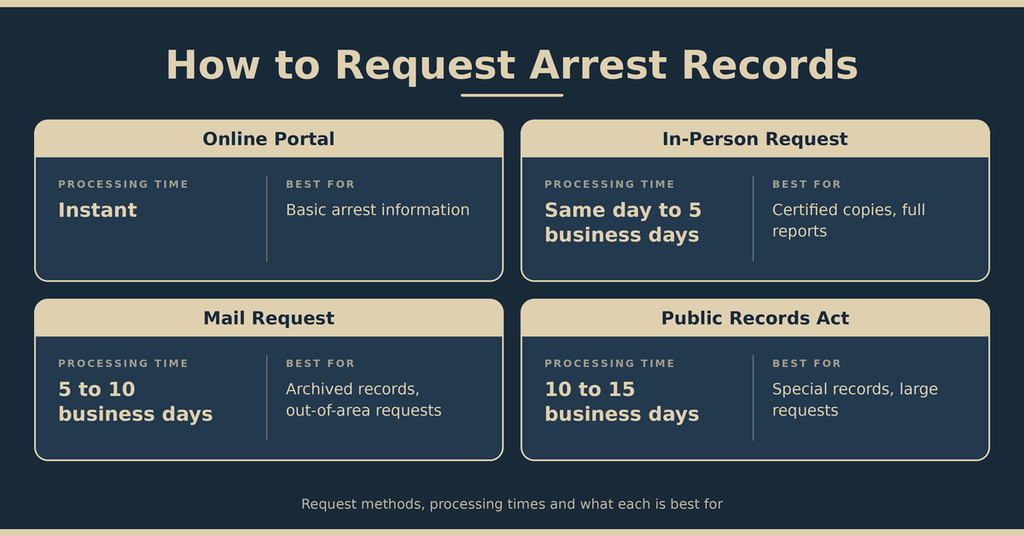
You can obtain arrest records in Sacramento County through several methods, depending on the type of record you need. The fastest method is the online search portal, which gives you instant access to basic information. For certified copies or full reports, you need to submit a formal request. The Sheriff’s Office accepts online, in-person, and mail requests. Each method has its own requirements, processing time, and fees. The table below shows the main methods and what you can expect from each.
Online Records Requests
Online records requests are submitted through the Sheriff’s Office portal or the Public Records Act system. You fill out a form with the person’s name, the arrest date, and any other details you have. The system processes the request and sends the records by email or mail.
Online requests are the most convenient way to get basic arrest information. For certified copies, you may still need to visit the office in person or submit a mail request. Always include your contact information so the office can reach you with questions or updates.
In-Person Requests
In-person requests are submitted at the Sheriff’s Office records division during business hours. You fill out a request form and provide identification. The staff will search the database, pull the record, and give you a copy before you leave, depending on the type of record.
In-person requests are best for certified copies, full police reports, and records that need same-day processing. The office is located at 4510 Orange Grove Avenue, Sacramento, CA 95841. Office hours are Monday through Friday, 8:00 AM to 4:00 PM, excluding holidays.
Mail Requests
Mail requests are submitted by sending a written request to the Sheriff’s Office records division. Include the person’s name, the arrest date, the case number, and your contact information. Enclose a self-addressed stamped envelope and any required fees.
Mail requests take longer to process but are useful for out-of-area requests or archived records. The office processes mail requests in the order they are received. Allow extra time if you need the record by a specific date.
Required Request Information
Every records request must include specific information to help the office locate the file. The list below shows the details you need to provide for a successful request.
- Full legal name of the person arrested
- Date of birth or approximate age
- Arrest date or date range
- Arresting agency, if known
- Case number or report number, if available
- Your contact information
- Type of record requested (certified copy, full report, redacted copy)
Copy Fees
Copy fees cover the cost of locating, copying, and certifying arrest records. The Sheriff’s Office charges a standard fee per page, plus an extra fee for certified copies. Fees are set by California law and may change over time.
You can pay copy fees by cash, check, or money order for in-person requests. Mail requests should include a check or money order made out to the Sacramento County Sheriff’s Office. Online requests accept credit or debit cards through the portal.
Processing Times
Processing times depend on the type of record, the workload of the office, and the method of request. Basic online searches are instant. In-person requests are often processed the same day. Mail and Public Records Act requests take longer, depending on the complexity of the search.
If your request is urgent, contact the records division by phone to ask about expedited processing. The office may be able to speed up the request for an extra fee or in cases involving legal deadlines. Always plan ahead for time-sensitive requests.
Certified Copies
Certified copies of arrest records are official documents with a raised seal or stamp that confirms their authenticity. They are often required for court cases, immigration matters, and background checks for employment or licensing. Certified copies carry a higher fee than regular copies.
You can request certified copies in person or by mail. The office will verify the record, add the certification, and return the document to you. Allow extra time for processing and shipping if you submit your request by mail.
Arrest Record Accuracy and Limitations
Arrest records are official documents, but they are not always perfect. Errors can happen during data entry, updates may be delayed, and some records may be incomplete. Knowing the limits of arrest records helps you interpret the information correctly.
The Sheriff’s Office works to keep records accurate and current, but the public should still verify the details when using them for legal or personal matters. If you find an error, you can request a correction through the records division.
Official Record Sources
Official record sources are the most reliable places to get arrest information. In Sacramento County, the Sheriff’s Office and the Superior Court are the primary sources. Their databases are updated regularly and are tied to the agencies that created the records.
Third-party websites may post arrest records, but they are not always accurate or up to date. Use official sources whenever possible, especially for legal matters, background checks, or official documentation. The official portal links at the top of this page direct you to the right sources.
Recently Updated Arrest Information
Recently updated arrest information reflects the most current status of a case. The Sheriff’s Office updates records as new information comes in, including charge changes, custody updates, and court rulings. Recent updates may take a few days to appear on the public portal.
If you need the most current information, check the date of the last update on the record. You can also contact the records division by phone for real-time updates on active cases. The staff can confirm the latest status and any pending changes.
Delayed Record Updates
Delayed record updates happen when the system has not yet caught up with new information. Updates can be delayed due to court schedules, data entry backlogs, or system maintenance. The delay is usually short, but it can affect the information you see online.
If you suspect a record is out of date, contact the Sheriff’s Office to confirm. They can check their internal system and tell you if an update is pending. For court-related information, the Superior Court’s case index may have more current details.
Incorrect Arrest Information
Incorrect arrest information can include wrong names, wrong dates, wrong charges, or other data entry errors. These errors are rare but can happen. If you find an error, you can request a correction through the records division.
To request a correction, submit a written request with the correct information and any supporting documents. The office will review the request, verify the correct details, and update the record. Corrected records show the new information along with the date of the correction.
Duplicate Records
Duplicate records can appear when a person is arrested more than once for related charges, or when a record is entered into the system twice by mistake. The system may show two entries for the same arrest event, which can confuse search results.
If you see a duplicate record, contact the records division to confirm which entry is correct. They can merge the duplicates or mark one as inactive. Duplicate records do not affect the legal status of the case, but they can make searches harder to read.
Sealed or Expunged Records
Sealed or expunged records are removed from public view under California law. Sealing hides the record from the public, while expungement clears the conviction from the person’s record. Both processes require a court order and are granted under specific conditions.
Once a record is sealed or expunged, it no longer appears in public searches. Only certain agencies and the person involved can access it. The Sheriff’s Office updates the system to reflect the change, and the record is removed from the public portal.
Limitations of Arrest Records
Arrest records have clear limits. They only show the arrest event, not the full story behind the case. They do not prove guilt, and they may not reflect the final outcome of the court process. The list below shows the main limits to keep in mind.
- An arrest is not a conviction.
- Charges may be dropped or reduced after the arrest.
- Records may be sealed or expunged.
- Information may be delayed or incomplete.
- Mugshots may be missing or restricted.
- Juvenile records are not public in most cases.
Arrest Records Search Problems
Sometimes a search does not return the results you expect. Common issues include missing records, incorrect spellings, outdated information, and restricted files. Knowing the cause of the problem helps you fix it and find the right record.
The Sheriff’s Office portal includes tools and tips to help you troubleshoot search problems. If you cannot find a record on your own, the records division can help you locate the file through a formal request.
Arrest Record Not Found
If an arrest record is not found, the person may not have been arrested in Sacramento County, or the record may be filed under a different name or date. The system searches based on the information you enter, so even a small spelling error can cause a miss.
Try searching with different name spellings, date ranges, or locations. If the record still does not appear, contact the records division for help. They can run a manual search using broader criteria to locate the file.
Incorrect Name or Spelling
An incorrect name or spelling is one of the most common reasons a search fails. The system matches the name you enter to the name on the record, so the spelling must match exactly. If the record has a different spelling, the system will not return it.
Try variations of the name, including middle names, aliases, and previous legal names. If you are not sure of the spelling, use a wildcard search or contact the records division for help. They can look up the name in their system and confirm the correct spelling.
Incorrect Arrest Date
An incorrect arrest date can also cause a search to fail. The system filters results based on the date you enter, so an off-by-one error can hide the record. If you do not know the exact date, use a date range to widen the search.
Date ranges are useful when you only know the month or year of the arrest. They also help you find records filed under a different date, such as the booking date instead of the arrest date. The record will note both dates for clarity.
Missing Case Number
A missing case number means you cannot search by that identifier. Case numbers are assigned once charges are filed, so a record may not have a case number if charges were never filed. The arrest record still exists, but it is only searchable by name, date, or location.
If you need the case number, you can find it on court documents, police reports, or the Superior Court’s case index. You can also contact the Sheriff’s Office to ask for the case number tied to a specific arrest.
Record Not Yet Available
A record may not yet be available if the arrest is recent and the system has not yet processed it. There is usually a short delay between the arrest and the online posting. Records for major incidents may take longer due to the volume of paperwork.
If you cannot find a recent record, check back in a few days. The system updates daily, and most new records appear within 24 to 72 hours. For urgent needs, contact the records division to ask about the status of the record.
Restricted Record
A restricted record is one that is not available to the public due to a court order, active investigation, or privacy law. The Sheriff’s Office will not show restricted records in public search results, even if you have the right name and date.
If you believe a record is restricted, contact the records division to ask about access. You may need to file a motion with the court or work with a lawyer to view the record. The office can explain the restriction and tell you the steps to seek access.
Archived Arrest Record
An archived arrest record is one that has been moved to long-term storage. Older records may be stored in scanned files, microfilm, or off-site archives. They are still public, but they may not be searchable through the online portal.
To access an archived record, submit a formal request to the records division. Include the name, date, and any other details you have. The staff will search the archives and provide a copy if the record is found. Archived requests take longer to process.
Contact Information
For questions about arrest records, records requests, or certified copies, contact the Sacramento County Sheriff’s Office using the details below. The office is open Monday through Friday during regular business hours and is closed on county holidays.
Frequently Asked Questions
Find quick answers about accessing arrest records in Sacramento County, including online searches, name lookups, date queries, public access rules, and how to obtain certified copies.
How can I search arrest records online?
Visit the Sacramento County Sheriff’s official portal at the provided link. The site lets you enter a name, date range, location, or case number. After submitting, the system pulls data directly from the county arrest database and displays the matching entries. No in‑person visit or paper request is needed for basic information. The portal works 24/7, so you can check records at any time from a computer or mobile device.
Can I look up an arrest record by name?
Yes, the online search tool accepts a full or partial name. Type the first and last name you have, then click search. The results list any arrests that match the entered name, showing the arrest date, location, and case number. If multiple people share similar names, you can narrow the results by adding a birth year or known address. The portal updates regularly, so recent arrests appear quickly.
Where do I find arrest records by date in Sacramento?
Use the same Sheriff’s website and select the date‑range option. Enter the start and end dates for the period you need. The system returns all arrests recorded within that window, including the arrest time, agency, and charge details. This feature helps locate recent incidents or historical data without contacting the office. Results can be exported or printed for personal reference.
Are arrest records public in California?
Arrest records are generally considered public information in California, unless a court orders them sealed or expunged. The county sheriff’s office makes basic arrest data available online for anyone to view. Certain details, such as juvenile records or ongoing investigations, may be restricted. If you encounter a sealed or expunged file, it will not appear in the public search results.
How do I request a certified copy of an arrest record?
Contact the Sacramento County Sheriff’s Records Division during office hours. Provide the subject’s full name, date of arrest, and case number if known. You may submit the request in person, by mail, or via the online portal’s request form. A small fee covers copying and certification. After payment, the office issues a certified copy that bears the official seal and can be used for legal or employment purposes.